


Skip to content
TerryWhite Chemmart

Learn more about booking a consultation with a Pharmacist for advice and treatment

Hero Image

Urinary Tract Infection (UTI)

If you’ve ever experienced a UTI, you’ll know the tell-tale signs - an intense and constant urge or pressure to urinate  followed by a burning pain when you do.

It’s one of the most common infections in humans, affecting around 1 in 2 women and 1 in 20 men during their lifetime*^. Urinary Tract Infections (commonly referred to as UTIs) can happen anywhere in the urinary tract# and are very common in women, babies and the elderly.

UTIs occur when microbes (microscopic bacteria) or germs enter the urinary tract or bladder and multiply, causing a number of painful symptoms.

If left untreated, the infection can spread to your kidneys and other parts of your body, so it’s important to know the signs to look out for and seek treatment immediately.

Learn more about a UTI consultation here

What are the different types of UTIs?

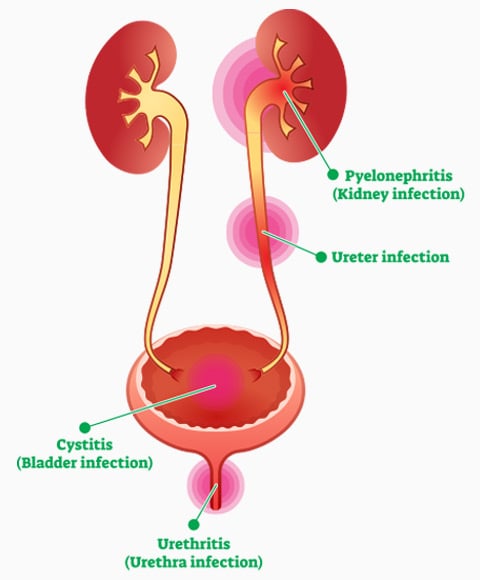
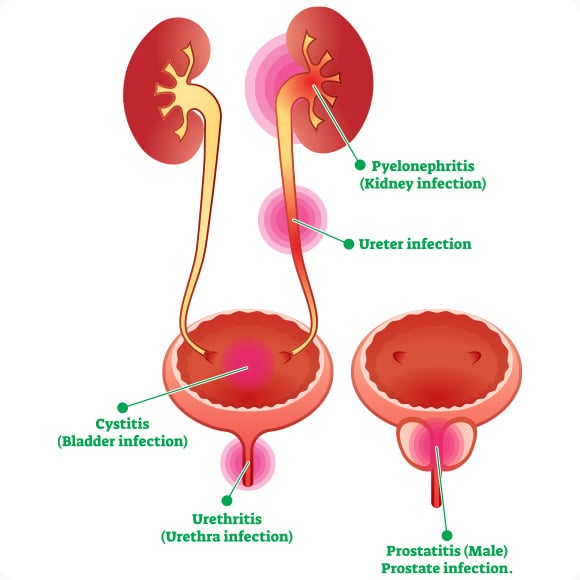
Because UTI is a broad term relating to an infection of anywhere in the urinary tract (including in the kidneys, ureters, bladder, and urethra)#, there are different types of UTIs based on where the infection is*:

Urethritis - Infection of the urethra

Cystitis - Infection of the bladder

Pyelonephritis - Infection of the kidneys

Vaginitis - Infection of the vagina

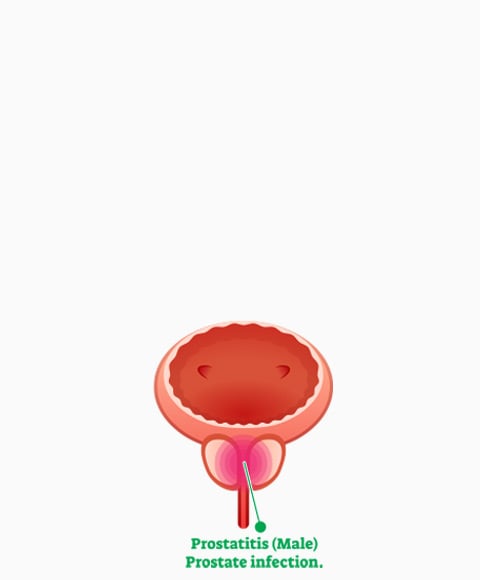
Prostatitis - Infection of the prostate (men)

How long does a UTI last?

Most UTIs can be cured by taking a course of antibiotics. Once treatment begins, symptoms usually go away within 24 to 48 hours. If you have a more severe infection, such as a kidney infection, symptoms may last longer even with treatment.1

Symptoms checker

UTI
Kidney infection

UTI

The type and severity of symptoms will vary from person to person. Depending whether a UTI is in the upper or lower urinary tract will also affect what symptoms are experienced. If you have a UTI, you may experience some or all of these symptoms*:

  • Burning pain when urinating
  • Increased frequency of urination, without passing much urine
  • The feeling your bladder is full, even if you’ve only just gone
  • Pressure in your lower abdomen
  • Pain above the pubic bone
  • Pelvic pain (women) or rectal pain (men)^
  • Urine that is cloudy, dark or has a strong odour
  • Blood in your urine – if you notice this, see your GP straight away
  • Feeling tired, shaky, confused or weak – common in older women

Kidney infection

If a UTI has reached the kidneys, seek medical attention immediately as this can lead to more serious health conditions. In addition to the above UTI symptoms, someone with a kidney infection may also experience*:

  • Fever or chills
  • Lower abdominal pain
  • Back pain
  • Vomiting

What causes a UTI?

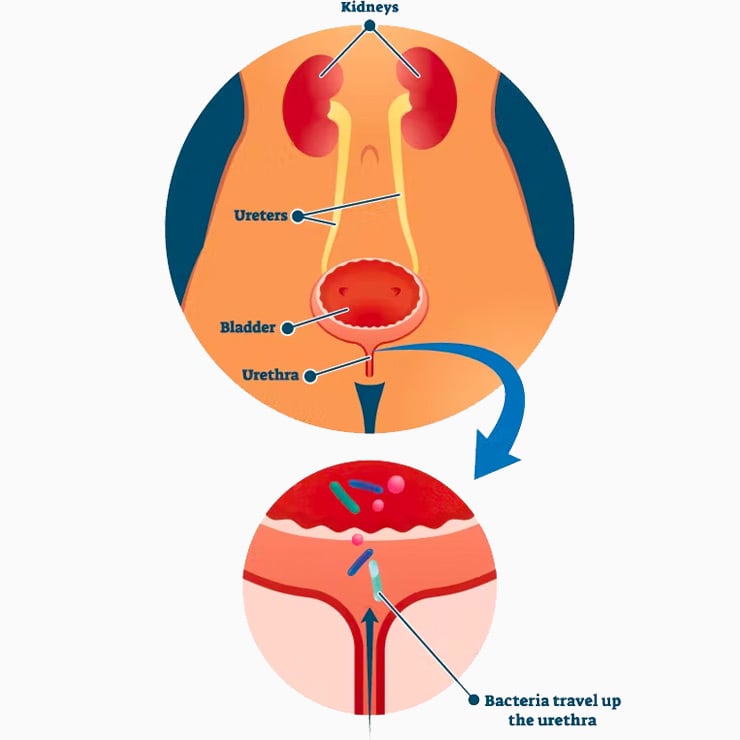
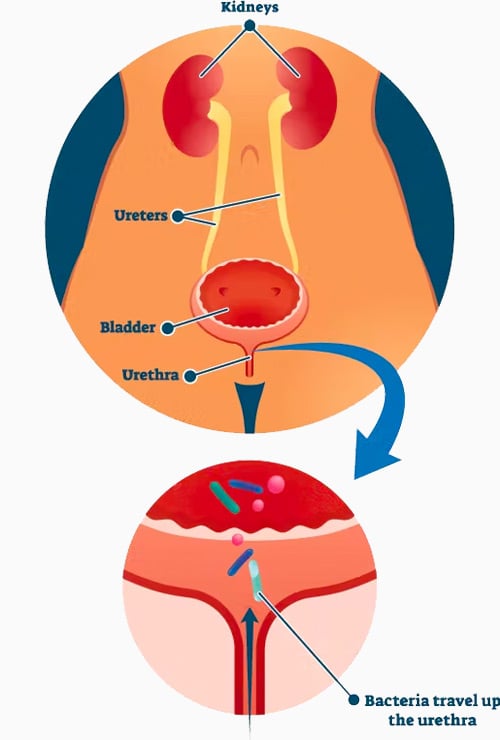
Our kidneys are responsible for filtering waste product through our urine, through a tube called a ‘ureter’ which connects to the bladder.

When urine leaves the kidney through the ureters and enters the bladder, our body receives the signal to wee.  Urine leaves our body through another tube called a ‘urethra’ (different to ureter)*.

Urinary tract infections happen when a microbe enters the urinary tract (often through the urethra, but sometimes through the bloodstream) and multiplies, causing inflammation, pain, and other nasty side effects^.

Bacteria can get into the urethra several ways*:

  • The most common bacteria to cause a UTI is Escherichia coli (E. coli), which is spread from the anus to the urethra. This can occur if you wipe incorrectly and accidentally transfer faecal bacteria into the urethra  
  • Yeast getting into the urinary tract, such as from thrush. However sometimes treating a UTI with antibiotics can lead to a yeast infection<.
  • Sexual transmission – it can be shared between contact with partners
  • Not drinking enough water – drinking plenty of water means our bladder tends to empty more frequently, and helps to flush out any bacteria from lingering in the urinary tract walls 
  • Poor bathroom hygiene (such as wiping from back to front) may contribute

Can a UTI heal on its own?

Very mild UTIs may heal on their own within a few days. However, most of the time, antibiotics are needed to treat a UTI. Left untreated, a UTI can become more serious.

It’s possible for bacteria to enter the bloodstream which can be life-threatening.2

Risk factors that increase the chances of a UTI^*:

Being female

Women are at much higher risk of UTIs, because the female urethra is only four centimetres long (versus the average male urethra of 18-20cm length>) and very close to the vagina and anus, so bacteria has a much shorter distance to travel to enter the bladder.

Being sexually active

Sexually active women are vulnerable, as bacteria can be easily spread from outside.

Babies

Babies are at higher risk of UTIs. UTIs in children should be investigated as they may indicate a more serious underlying condition.

Age

More common in the elderly, especially elderly women.

Being sedentary

Lack of mobility or extended bed rest.

Previous UTIs

Previous history of UTIs will increase the chance of recurring UTIs.

Urinary catheters

Ongoing use of urinary catheters.

Urinary tract blockages

Such askidney stones, enlarged prostate, and certain cancers.

Diabetes

Especially when managed poorly.

Pregnancy

Pregnancy can cause changes in the urinary tract>>.

Weakened immunity

Weakened immunity can make a person more vulnerable to infection.

Can recurrent UTIs be a sign of cancer?

Recurrent UTIs are usually not a sign of cancer but they can be linked to cancer. Many other conditions can cause similar symptoms to a UTI.

If you experience recurrent symptoms, see your doctor to ensure you receive the right diagnosis and treatment for your condition.4

Frequently asked questions about UTI

Is a UTI contagious?

No. UTIs are not a sexually transmitted infection (STI) and are not ‘contagious’*. However, the bacteria can be passed between partners through sexual contact occurring in or near the areas containing bacteria, so it’s important to see your GP and treat both people as soon as possible.

While most UTIs are not contagious and can’t be passed from person to person, some types of sexually transmitted infections (STIs), such as chlamydia, can cause urethritis (swelling and irritation of the urethra).3

How to treat a UTI?

UTI’s are treated with antibiotics prescribed by a GP. If you think you have a UTI (particularly if you think it’s a bladder or kidney infection), it’s important to seek urgent medical attention as it can help prevent the infection from spreading or getting worse*. If you’re presenting with UTI symptoms, your doctor will perform a urine test to identify which microbe is present and the most effective antibiotics to treat it. In most cases, a UTI is easy to treat and relatively quick to clear up with a course of antibiotics.

What happens if you don’t treat a UTI?

Some UTIs may go away on their own, however the symptoms can be very unpleasant to suffer through, and it can be risky to leave a UTI untreated. An untreated urinary tract infection can grow worse over time and spread to the kidneys and other parts of your body. In rare cases, it can even spread to the bloodstream which can be life threatening. Don’t ignore your symptoms – seek medical help.

How to help prevent a UTI?

UTIs are often unavoidable and almost always unpleasant. But prevention is always better than a cure, and there’s plenty of things you can do to help prevent getting a UTI in the first place. A few approaches some women find helpful include*#:

  • Drink lots of water to flush the urinary system, aiming for 6-8 glasses (or 1.5-2L) per day
  • Wipe from front to back (vagina towards bottom) after going to the toilet
  • Empty your bladder before and after sex
  • Empty bladder completely when you go to the toilet
  • Avoid holding on to a full bladder – go as soon as you feel the urge to urinate as the longer the urine is held in the bladder, the more time bacteria can grow
  • Treat vaginal infections (like thrush) immediately
  • Avoid using creams that kill sperm (spermicides), and talk to your Doctor about different birth control options instead
  • Take care to wash thoroughly each day, and avoid using douches or feminine hygiene sprays
  • Take showers or limit baths to 30 minutes
  • Wear cotton underwear and avoid tight-fitting pants that trap moisture. Remember to change out of swimwear or fitness wear quickly.

Can cranberry juice prevent a UTI?

Research on how effective cranberry juice is in treating or preventing UTIs is mixed*. It has been a popular method in the past as cranberries contain a substance that help prevent the E. coli bacteria from attaching to cells in the wall of the urinary tract. If this is something you’re trying, be sure to let your Doctor know as cranberry juice can impact the effectiveness of some antibiotics*.


When to seek help?

Urinary tract infections can become very dangerous if left untreated. If you think you have a UTI, it’s important to seek medical attention immediately. Early treatment of urinary infection can help prevent infection spreading to the bladder or kidneys which are both serious issues*.

Is a UTI contagious?

No. UTIs are not a sexually transmitted infection (STI) and are not ‘contagious’*. However, the bacteria can be passed between partners through sexual contact occurring in or near the areas containing bacteria, so it’s important to see your GP and treat both people as soon as possible.

how to treat a UTI

How to treat a UTI?

UTI’s are treated with antibiotics prescribed by a GP. If you think you have a UTI (particularly if you think it’s a bladder or kidney infection), it’s important to seek urgent medical attention as it can help prevent the infection from spreading or getting worse*. If you’re presenting with UTI symptoms, your doctor will perform a urine test to identify which microbe is present and the most effective antibiotics to treat it. In most cases, a UTI is easy to treat and relatively quick to clear up with a course of antibiotics.

What happens if you don’t treat a UTI?

Some UTIs may go away on their own, however the symptoms can be very unpleasant to suffer through, and it can be risky to leave a UTI untreated. An untreated urinary tract infection can grow worse over time and spread to the kidneys and other parts of your body. In rare cases, it can even spread to the bloodstream which can be life threatening. Don’t ignore your symptoms – seek medical help.

How to help prevent a UTI

UTIs are often unavoidable and almost always unpleasant. But prevention is always better than a cure, and there’s plenty of things you can do to help prevent getting a UTI in the first place. A few approaches some women find helpful include*#:

  • Drink lots of water to flush the urinary system, aiming for 6-8 glasses (or 1.5-2L) per day
  • Wipe from front to back (vagina towards bottom) after going to the toilet
  • Empty your bladder before and after sex
  • Empty bladder completely when you go to the toilet
  • Avoid holding on to a full bladder – go as soon as you feel the urge to urinate as the longer the urine is held in the bladder, the more time bacteria can grow
  • Treat vaginal infections (like thrush) immediately
  • Avoid using creams that kill sperm (spermicides), and talk to your Doctor about different birth control options instead
  • Take care to wash thoroughly each day, and avoid using douches or feminine hygiene sprays
  • Take showers or limit baths to 30 minutes
  • Wear cotton underwear and avoid tight-fitting pants that trap moisture. Remember to change out of swimwear or fitness wear quickly.

Can cranberry juice prevent a UTI?

Research on how effective cranberry juice is in treating or preventing UTIs is mixed*. It has been a popular method in the past as cranberries contain a substance that help prevent the E. coli bacteria from attaching to cells in the wall of the urinary tract. If this is something you’re trying, be sure to let your Doctor know as cranberry juice can impact the effectiveness of some antibiotics*.

can cranberry juice prevent a UTI?

When to seek help?

Urinary tract infections can become very dangerous if left untreated. If you think you have a UTI, it’s important to seek medical attention immediately. Early treatment of urinary infection can help prevent infection spreading to the bladder or kidneys which are both serious issues*.

How TerryWhite Chemmart can help

At TerryWhite Chemmart, we have a range of products to assist with and provide relief of urinary tract infections.

Our team of friendly pharmacists are on hand to discuss any concerns, provide expert advice and recommend products that may be right for you.

Find your nearest store

Products that may help

Always read the label and follow the directions of use

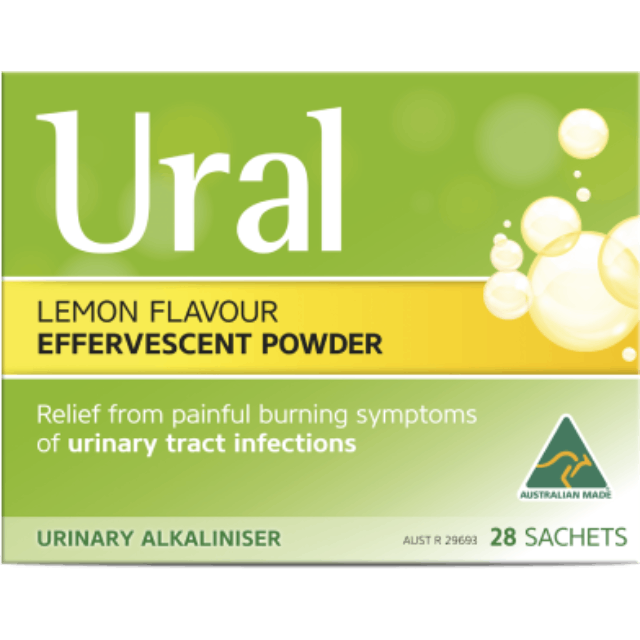
Ural Effervescent Powder Sugar Free 28 sachets

Shop now

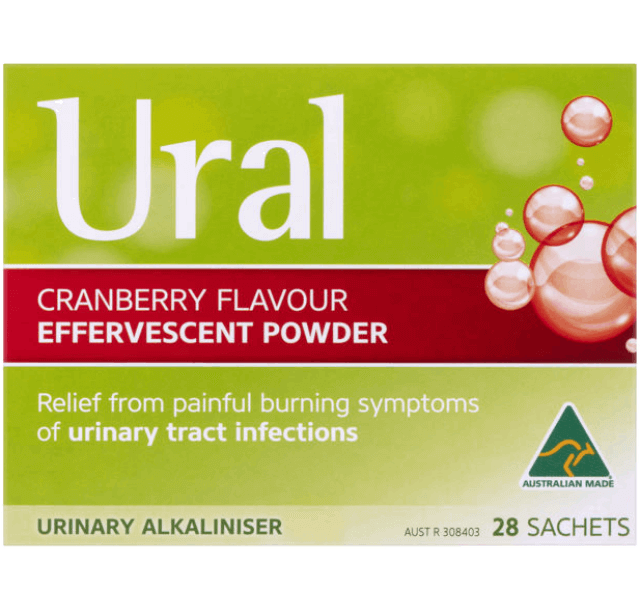
Ural Cranberry Effervescent Powder Sugar Free 28 sachets

Shop now

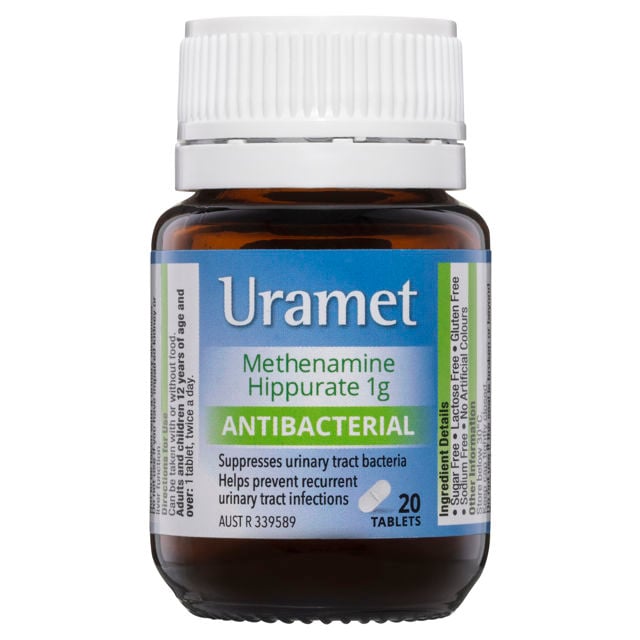
Uramet 1g
20 tablets

Shop now

Ural Effervescent Powder Sugar-Free 28 sachets

General Information

Ural provides effective relief from the painful burning symptoms of urinary tract infections such as cystitis.

Bacterial infections of the bladder can make your urine more acidic than normal – which causes the painful and burning sensations you get when passing urine.

Ural Effervescent Powder is a urinary alkaliniser, which works by raising the pH of urine. This makes the urine less acidic which provides effective relief from the pain of cystitis.

Use & Dosage

For adults and children 12 years and over. Dissolve 1-2 sachets in a glass of cold water. May be taken up to 4 times daily.

Warnings, Storage & Disposal

Always read the label and follow the directions for use.

Read The Warnings Before Purchase.

If Symptoms Persist, Talk To Your Health Professional.

Do not take this medicine for more than 5 days unless advised to do so by a doctor.

Do not give this medicine for children under 12 years unless advised to do so by a doctor.

Consult a doctor if pain or irritation persists for more than 48 hours or if you notice blood in your urine.

Ingredients

Sodium bicarbonate 1.76 g, tartaric acid 890 mg, citric acid anhydrous 720 mg, sodium citrate anhydrous 630 mg. Also contains: saccharin sodium, lemon oil flavouring.

Ural Cranberry Effervescent Powder Sugar Free 28 sachets

General Information

URAL Effervescent Powder sachets provides relief from the painful burning symptoms of urinary tract infections (UTIs).

URAL Effervescent Powder sachets provides relief from the painful burning symptoms of UTIs. It works by raising the pH of urine. This makes the urine less acidic which provides relief from the painful  burning symptoms. Available in lemon and cranberry flavours.

Ural Effervescent Powder is an Australian-made urinary alkaliniser and Australia’s #1 selling UTI management brand*. *IRI Scan Data: Total Pharmacy Aus Market OTC Urinary Health Units & Value sales (based on segment/item list as defined by Aspen) MAT 26/06/22

• A pleasant tasting effervescent drink that can be taken up to 4 times daily by adults and children 12 years and over.
• No added sugar, Gluten Free, Lactose Free, Dairy Free

Use & Dosage

• Adults children 12 years and over
• Dissolve to sachets in a glass of cold water and take up to times daily
• Do not take for more than days unless advised to do so by a doctor
• URAL Effervescent Powder sachets provides relief from the painful burning symptoms of UTIs

Warnings, Storage & Disposal

• Do not take this medicine for more than 5 days unless advised to do so by a doctor.
• Do not give this medicine to children under 12 years of age unless advised to do so by a doctor.
• Check with a doctor or pharmacist before using this medicine if you are taking other medicines or if you have kidney problems, heart problems or high blood pressure.
• This preparation contains 644mg of sodium per dose which should be taken into account by those on a low sodium diet.
• Consult a doctor if pain or irritation persists for more than 48 hours or if you notice blood in your urine.
Store below 30°C.
• Do not take this medicine for more than 5 days unless advised to do so by a doctor.
• Do not give this medicine to children under 12 years of age unless advised to do so by a doctor.
• Check with a doctor or pharmacist before using this medicine if you are taking other medicines or if you have kidney problems, heart problems or high blood pressure.
• This preparation contains 644mg of sodium per dose which should be taken into account by those on a low sodium diet.
• Consult a doctor if pain or irritation persists for more than 48 hours or if you notice blood in your urine.

Ingredients

Each 4g sachet contains: sodium bicarbonate 1.75g, tartaric acid 500mg, citric acid anhydrous 714mg, sodium citrate anhydrous 625mg.

Also contains Vaccinium macrocarpon (Cranberry) fruit juice dry, colloidal anhydrous silica, calcium phosphate, saccharin, magnesium hydroxide

Uramet 1g - 20 & 100 tablets

General Information

Uramet (methenamine hippurate 1g) helps prevent recurrent UTIs. It is an antibacterial tablet, taken twice daily, that suppresses bacteria in the urine that can cause UTIs.

Uramet works by targetting the bacteria in the urine that cause UTIs. It may be used for short or long term UTI prevention, and can be used after successful initial treatment to help prevent recurrent UTIs.

There is no known bacterial resistance with Uramet.

- Sugar Free, Lactose Free, Gluten Free, Sodium Free

- No artificial colours

Made in Australia

Use & Dosage

Adults and children 12 years and over.

1 tablet, twice a day or as directed by a healthcare professional.

Can be taken with and without food.

Warnings, Storage & Disposal

Not to be taken with a urinary alkaliniser.

Do not use if you have impaired kidney or liver function.

Store below 30°C.

Always read the label and follow the directions for use.

Ingredients

Methenamine hippurate 1g

colloidal anhydrous silica,

magnesium stearate, povidone.

A note on language and gender
TerryWhite Chemmart recognises that gender is not binary and that not everyone identifies with the terms male or female. However, when referring to urinary tract infection, a person's physical and anatomical structures are important to determine severity and treatment options. For this reason, we have used the terms women, men, female and male on this page. 
Disclaimer
General advice only – this information should not replace the information provided to you by your health care professional. If symptoms are severe or persist, please speak to your health care professional. Information current as of date of publishing.
Sources
1Continence Foundation of Australia, Urinary Tract Infection (UTI), https://www.continence.org.au/urinary-tract-infection-uti
2NSW Emergency Care Institute, Urinary tract infection (UTI) in women, https://aci.health.nsw.gov.au/networks/eci/clinical/ed-factsheets/urinary-tract-infection-uti-in-women
3Pharmaceutical Society of Australia, Urinary tract infection (Cystitis), https://www.psa.org.au/wp-content/uploads/2023/02/4254-FC-Urinary-tract-infection_ekiosk.pdf
4Wynn J, Homewood D, Tse V, Fong E, Roberts MJ, Chung E, Dowling C. What to do about recurrent urinary tract infections: A review of evidence behind emerging therapies. Aust J Gen Pract. 2024 May;53(5):265-273. doi: 10.31128/AJGP-10-23-7004. PMID: 38697057. https://www1.racgp.org.au/ajgp/2024/may/what-to-do-about-recurrent-urinary-tract-infection
*https://www.betterhealth.vic.gov.au/health/conditionsandtreatments/urinary-tract-infections-uti
#https://www.womenshealth.gov/a-z-topics/urinary-tract-infections
^https://www.healthline.com/health/urinary-tract-infection-adults
>https://pubmed.ncbi.nlm.nih.gov/18778496/
<https://www.healthline.com/health/yeast-infection-vs-urinary-tract-infection
>>https://www.ncbi.nlm.nih.gov/books/NBK537047/